DharmaPath
Festival calendar
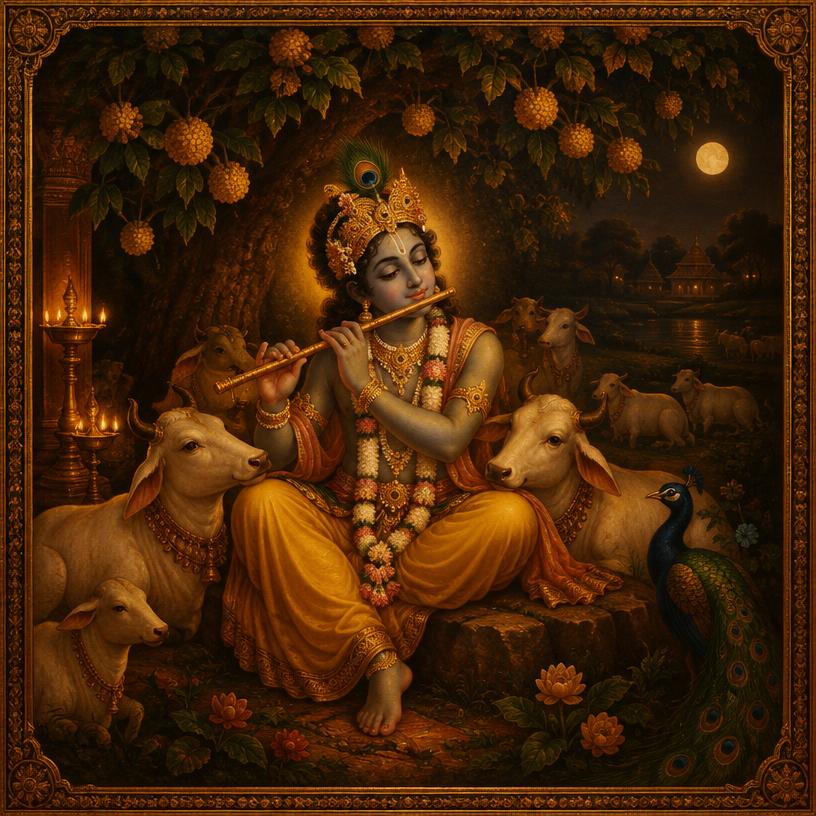
Krishna Janmashtami devotional artwork

कृष्ण जन्माष्टमी

Krishna Janmashtami

A birth kept at midnight, in a prison cell, in the rain — the festival preserves the circumstances, not just the date.

Date (2026)

4 September 2026

Tithi

Krishna Ashtami

Month

Bhadrapada

Deity

Krishna

Katha — the story behind it

01

The sacred story

Janmashtami celebrates Krishna’s birth amid fear and the promise of freedom from Kamsa’s cruelty. Warned that his sister Devaki’s eighth child would bring his death, Kamsa imprisoned Devaki and Vasudeva. In the widely followed account, he killed their first six children; the seventh, Balarama, was miraculously transferred to Rohini’s womb. Krishna, the eighth child, was born at midnight on the eighth lunar day, with Rohini nakshatra also associated with his birth in tradition. The prison guards fell asleep and Vasudeva’s chains loosened. Carrying the baby, he crossed the rain-swollen Yamuna towards Gokul. The river gave him passage, and Shesha sheltered Krishna beneath his hoods. Vasudeva exchanged Krishna for Yashoda’s newborn daughter and returned to the prison. When Kamsa tried to kill the girl, she escaped his grasp, appeared in divine form, and warned that his destroyer was elsewhere. Devotees remember the midnight birth with व्रत, singing, पूजा, आरती, and प्रसाद; many place baby Krishna in a cradle. The story teaches that divine hope can arise within suffering, while Vasudeva’s journey models courage and loving responsibility. Regional tellings differ in details, and some celebrations especially emphasise Krishna’s childhood through cradles, tableaux, or दही हांडी.

02

Meaning within the story

A birth kept at midnight, in a prison cell, in the rain — the festival preserves the circumstances, not just the date. Two Krishnas are held in one festival — the ruler-philosopher of the Gita and the butter-stealing child of Braj — and the ritual chooses the child. That is the theological claim being made by the cradle, the butter and the midnight hour: intimacy over majesty.

03

How the story becomes worship

Fast through the day: The wait is the observance. The day is spent in the condition of expectation the story describes. Midnight abhisheka: The hour is kept exactly as the text gives it. Doing it at a convenient time would lose the thing the story is about — deliverance in the dark hour. Jhulan and bhog: Butter is the food of the Braj stories, stolen and shared. The offering follows the child in the narrative, not a generic deity. Aarti and paran: Ending the fast at the moment of birth ties the body's relief to the story's turn.

Where it comes from

Bhagavata Purana, Canto 10HarivamsaVishnu PuranaGarga Samhita

Puja samagri — what to gather

  • ·A small Bal Gopal image, cradle, and new clothes
  • ·Panchamrita — milk, curd, ghee, honey, sugar
  • ·Makhan-mishri, dhania panjiri, curd, butter
  • ·Tulsi leaves (offerings to Vishnu forms require tulsi)
  • ·Peacock feather, flute, yellow cloth

Vrat — the fast

Nirjala or phalahar from sunrise, broken at midnight after the abhisheka; some break it only at sunrise the next day.

Aarti & shloka — read, understand, listen

Aarti · common version

Aarti Kunj Bihari Ki

आरती कुंजबिहारी की, श्री गिरिधर कृष्ण मुरारी की॥ गले में बैजन्ती माला, बजावै मुरली मधुर बाला। श्रवण में कुण्डल झलकाला, नन्द के आनन्द नन्दलाला॥ गगन सम अंग कान्ति काली, राधिका चमक रही आली। लतन में ठाढ़े बनमाली, भ्रमर सी अलक कस्तूरी तिलक॥ आरती कुंजबिहारी की॥

Roman transliteration

Aarti Kunj Bihari ki, Shri Giridhara Krishna Murari ki. Gale mein Vaijayanti mala, bajavai murali madhura bala.

Complete aarti meaning

This is the aarti of Krishna, the grove-dwelling lifter of Govardhana and vanquisher of Mura. Wearing the Vaijayanti garland, he plays the sweet flute; earrings shine at his ears and he is Nanda's delight. Dark as a rain cloud, crowned with forest flowers and a musk tilak, he stands radiant beside Radha.

Sung with temple-style devotional accompaniment

Shloka · with meaning

Krishna pranam

वसुदेवसुतं देवं कंसचाणूरमर्दनम्। देवकीपरमानन्दं कृष्णं वन्दे जगद्गुरुम्॥

Vasudeva-sutaṁ devaṁ, Kaṁsa-Cāṇūra-mardanam; Devakī-paramānandaṁ, Kṛṣṇaṁ vande Jagadgurum.

Meaning

I bow to Krishna, son of Vasudeva, joy of Devaki, vanquisher of tyranny, and teacher of the world.

A Braj aarti widely sung for Krishna; temple verses and pronunciation vary by region.

Next in the year

Ganesh Chaturthi

14 September 2026

Continue

From the day to the doing

Want to perform this puja properly, at home or at a temple?

Puja mode walks the full sequence — simple or detailed — with the meaning of every act.

Open puja mode