शिव
Shiva
The auspicious one — stillness, ascetic discipline and dissolution
Who is this?
Trimurti
Devi
Family of Shiva
Avatara
Vedic
Regional & planetary
Darshan
Vahana · vehicle
Nandiनन्दी
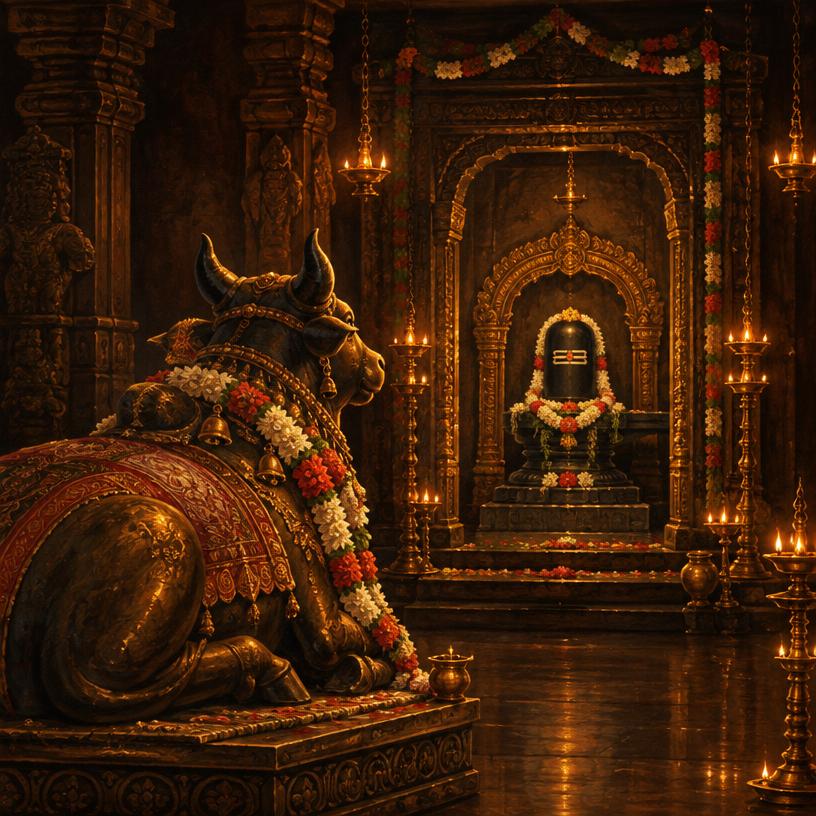
The bull — steady strength held in patience. He faces the sanctum, the posture of a devotee who waits.
Ayudha · weapons & attributes
Trishulaत्रिशूल
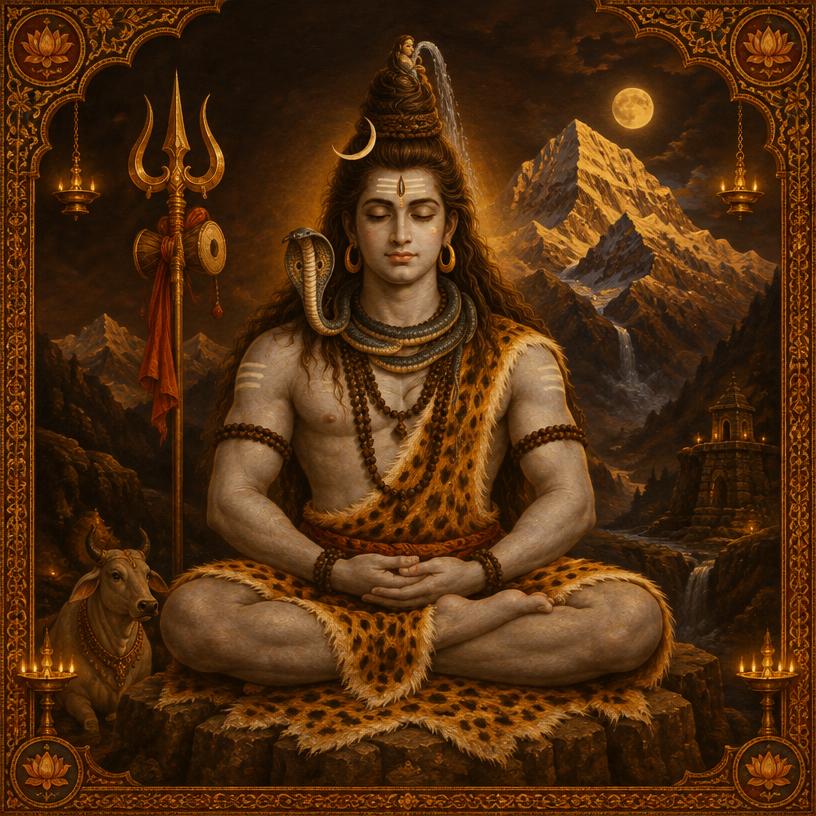
The trident — commonly read as the three gunas, or the three times, held in one hand.
Damaruडमरू
The hourglass drum whose beat is the first sound; not a weapon but always counted with them.
Pashupatastraपाशुपतास्त्र
The irresistible weapon of the Mahabharata and Ramayana, given only after long tapas.
Forms · रूप
Natarajaनटराज
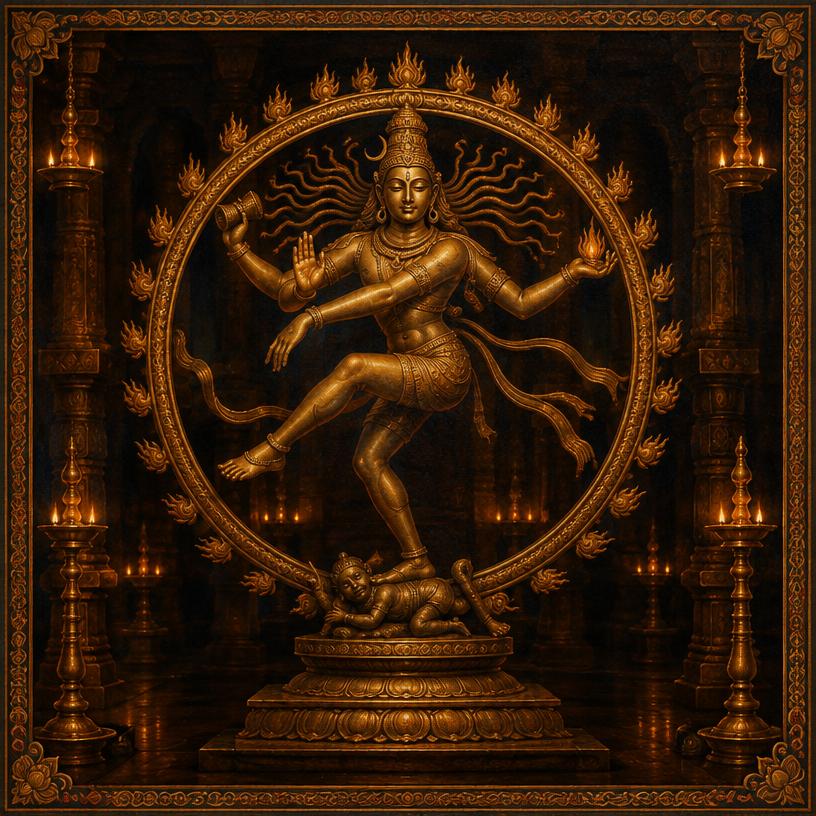
The cosmic dance — drum for sound and creation, flame for dissolution, raised hand for refuge.
Ardhanarishvaraअर्धनारीश्वर
Half Shiva, half Parvati: consciousness and energy shown as inseparable.
Bhairavaभैरव
The fierce guardian of Kashi, associated with time and the dissolving of fear.
Dakshinamurtiदक्षिणामूर्ति
The silent teacher facing south, teaching by stillness rather than speech.
Lingamलिङ्ग
The aniconic column — worship of the formless, with no face to fix the mind on.
What the tradition does
- Temples
- Kashi Vishwanath · Kedarnath · Chidambaram · Somnath · Rameswaram
- Festivals
- Maha Shivaratri · Shravan Somvar · Pradosham
- Mantra
- ॐ नमः शिवाय — Om Namah Shivaya
- Scriptures
- Shiva Purana · Linga Purana · Shvetashvatara Upanishad · Rudram (Yajurveda)
The reasoning
Shiva is the deity of what ends. Ash, the burning ground and the ascetic's stillness all point the mind at impermanence rather than away from it.
Shaiva schools treat Shiva as the supreme reality; Vaishnava and Shakta texts place him differently. Both readings sit inside the tradition.
Shiva — deeper branches
1 / 5 open· Natarajaनटराज
The cosmic dance. The drum (damaru) is sound and creation, the flame is dissolution, the raised hand is refuge, the trampled figure is forgetfulness.
· Ardhanarishvaraअर्धनारीश्वर
Half Shiva, half Parvati — consciousness and energy shown as inseparable rather than opposed.
· Bhairavaभैरव
The fierce guardian form, associated with time, Kashi and the dissolving of fear.
Related
The symbol opens a question
You have seen Shiva's forms. But why are these symbols used in worship?
Follow the thread from sacred image to tradition, scripture, reasoning and living practice.