कृष्ण
Krishna
The teacher in the chariot — play, love and duty argued out
Who is this?
Trimurti
Devi
Family of Shiva
Avatara
Vedic
Regional & planetary
Darshan
Vahana · vehicle
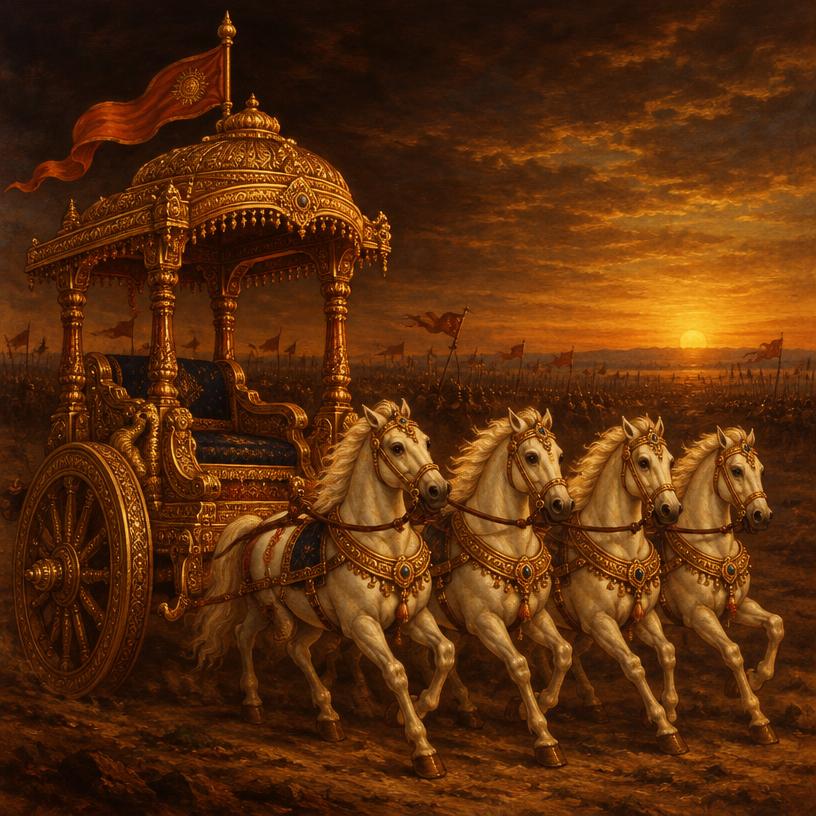
Chariot (no animal vahana)रथ
He drives rather than rides. The Gita uses the chariot itself as the image: senses as horses, mind as reins.
Ayudha · weapons & attributes
Sudarshana Chakraसुदर्शन चक्र
Carried as Vishnu's avatara, used sparingly in the epic.
Kaumodakiकौमोदकी
The mace of his four-armed form.
Bansuriबांसुरी
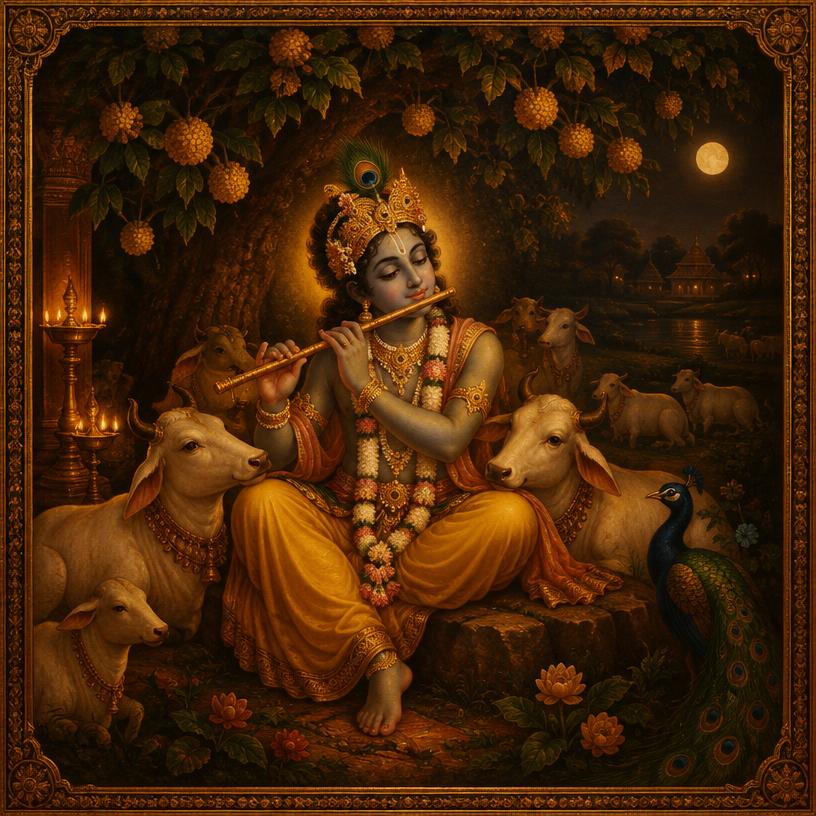
The flute — hollow, and therefore able to carry sound. Counted before any weapon.
Forms · रूप
Bala Krishnaबाल कृष्ण
The child with butter — the form of Gokul and Mathura stories.
Venugopalaवेणुगोपाल
The cowherd with the flute; the Vrindavan form.
Parthasarathiपार्थसारथि
Arjuna's charioteer — the form that speaks the Bhagavad Gita.
Jagannathजगन्नाथ
The abstract Puri form, carved in wood and renewed periodically.
What the tradition does
- Temples
- Dwarkadhish, Dwarka · Banke Bihari, Vrindavan · Guruvayur · Jagannath, Puri
- Festivals
- Janmashtami · Holi · Govardhan Puja · Rath Yatra
- Mantra
- ॐ नमो भगवते वासुदेवाय — Om Namo Bhagavate Vasudevaya
- Scriptures
- Bhagavad Gita · Bhagavata Purana · Harivamsa · Mahabharata
The reasoning
The Gita is a conversation, not a command: it works by argument on a battlefield where the questions are practical and the answers are reasoned step by step.
Vrindavan traditions centre the child and cowherd; Gita traditions centre the teacher. Both draw on different texts.
Related
The symbol opens a question
You have seen Krishna's forms. But why are these symbols used in worship?
Follow the thread from sacred image to tradition, scripture, reasoning and living practice.