DharmaPath
Festival calendar
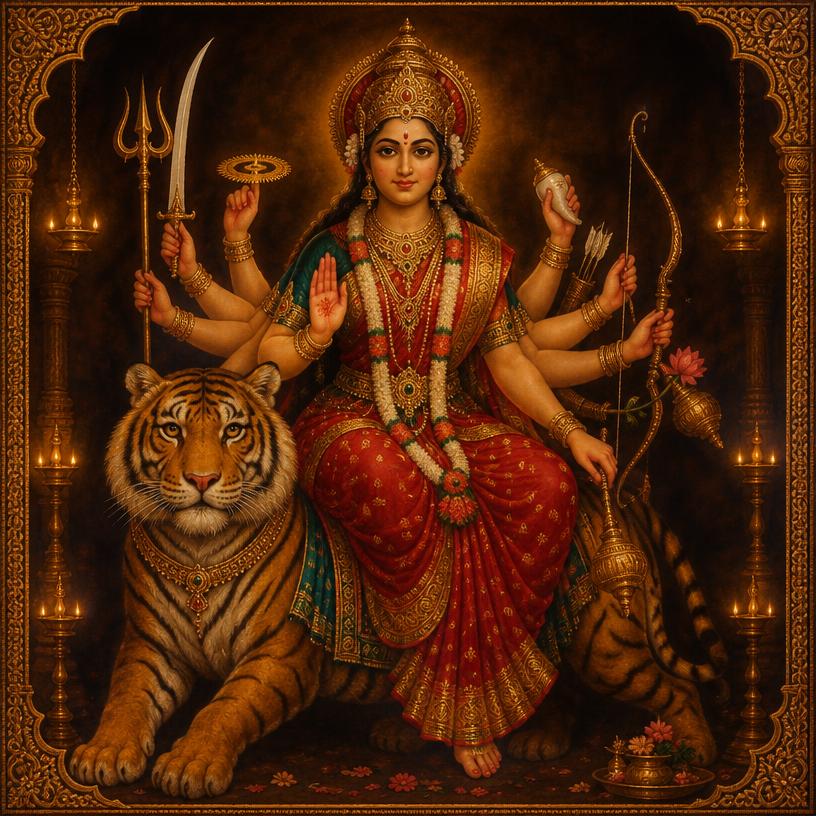
Sharad Navaratri & Dussehra devotional artwork

शारदीय नवरात्रि · दशहरा

Sharad Navaratri & Dussehra

Nine nights of the goddess, then the tenth day of victory — the longest structured observance in the year.

Date (2026)

11–20 October 2026

Tithi

Shukla Pratipada to Dashami

Month

Ashvina

Deity

Durga, Rama

Katha — the story behind it

01

The sacred story

Navaratri and Dussehra bring together several traditions of struggle and renewal. In the Devi’s story, Mahishasura gains a boon that leaves him confident no man or god can defeat him. He overpowers the gods, whose combined radiance takes the form of Durga. Armed with their weapons and riding her lion, she confronts the buffalo demon and defeats him despite his changing forms. Many festival retellings connect this struggle with nine nights of worship and victory on the tenth day, though the sequence differs among traditions. Another important strand celebrates Rama’s defeat of Ravana and the rescue of Sita. Bengali traditions tell of Rama awakening and worshipping the goddess in autumn before battle, an observance called akal bodhan; this episode is not presented identically in every Ramayana tradition. Devotees mark the season through पूजा, व्रत, recitation, dance, and regional customs such as worshipping young girls or displaying dolls. Dussehra may feature Ravana effigies, while Vijayadashami also marks Durga’s victory and farewell. These overlapping stories need not be reduced to one account. Together, they encourage courage, disciplined devotion, and resistance to arrogance and injustice, beginning with one’s own conduct.

02

Meaning within the story

Nine nights of the goddess, then the tenth day of victory — the longest structured observance in the year. Navaratri sits at the turn from monsoon to autumn, the season of illness and of the second sowing. Nine days of light food, early hours and restraint is a reset built into the calendar, and the tenth day is set as the day for anything new — a shop, a school year, a journey.

03

How the story becomes worship

Ghatasthapana: The sprouting grain is a live measure of the nine days — the observance is watched growing, not merely counted. Navadurga, day by day: Nine forms move from mountain-daughter to fierce destroyer to serene giver. The sequence is a progression, not a list. Ashtami / Navami puja: The abstract power invoked for eight days is then located in ordinary living people — the rite refuses to keep the goddess only in the image. Ayudha Puja: Deliberately stopping work to honour the means of work is a statement about skill as given rather than owned. Vijayadashami: Victory is placed on the tenth day, outside the nine — obtained after the discipline, not during it.

Where it comes from

Devi Mahatmya (Markandeya Purana)Devi Bhagavata PuranaKalika PuranaValmiki Ramayana

Puja samagri — what to gather

  • ·A clay pot (ghata) with barley seed sown in soil
  • ·Kalash, coconut, mango leaves, red cloth
  • ·Red flowers, especially hibiscus
  • ·Nine days' offerings — one for each form
  • ·Books, tools or weapons for Ayudha Puja on the ninth

Vrat — the fast

Many keep all nine days on fruit, milk and non-grain flours (kuttu, singhara, samak), with no onion, garlic or salt other than sendha namak.

Aarti & shloka — read, understand, listen

Aarti · common version

Jai Ambe Gauri

जय अम्बे गौरी, मैया जय श्यामा गौरी। तुमको निशिदिन ध्यावत, हरि ब्रह्मा शिवरी॥ माँग सिंदूर विराजत, टीको मृगमद को। उज्ज्वल से दोउ नैना, चन्द्रवदन नीको॥ कनक समान कलेवर, रक्ताम्बर राजै। रक्तपुष्प गल माला, कण्ठन पर साजै॥ केहरि वाहन राजत, खड्ग खप्परधारी। सुर-नर-मुनिजन सेवत, तिनके दुःखहारी॥ कानन कुण्डल शोभित, नासाग्रे मोती। कोटिक चन्द्र दिवाकर, सम राजत ज्योति॥

Roman transliteration

Jai Ambe Gauri, maiya jai Shyama Gauri. Tumako nishidina dhyavata, Hari Brahma Shivari.

Complete aarti meaning

Glory to Mother Amba Gauri, whom Vishnu, Brahma and Shiva contemplate day and night. Vermilion adorns her hair and musk her brow; her bright eyes and moonlike face shine. Clothed in red and garlanded with red flowers, she rides the lion, bears sword and vessel, and removes the sorrows of gods, people and sages.

Sung with temple-style devotional accompaniment

Shloka · with meaning

Devi mangala mantra

सर्वमङ्गलमाङ्गल्ये शिवे सर्वार्थसाधिके। शरण्ये त्र्यम्बके गौरि नारायणि नमोऽस्तु ते॥

Sarva-maṅgala-māṅgalye, Śive sarvārtha-sādhike; śaraṇye Tryambake Gauri, Nārāyaṇi namo'stu te.

Meaning

Salutations to Narayani: the auspicious among all that is auspicious, the refuge who brings worthy aims to fulfilment.

Jai Ambe Gauri is common in North Indian homes; Bengal, Gujarat and southern traditions use different songs and liturgies.

Next in the year

Sharad Purnima & Kojagari

25 October 2026

Continue

From the day to the doing

Want to perform this puja properly, at home or at a temple?

Puja mode walks the full sequence — simple or detailed — with the meaning of every act.

Open puja mode