DharmaPath
Festival calendar
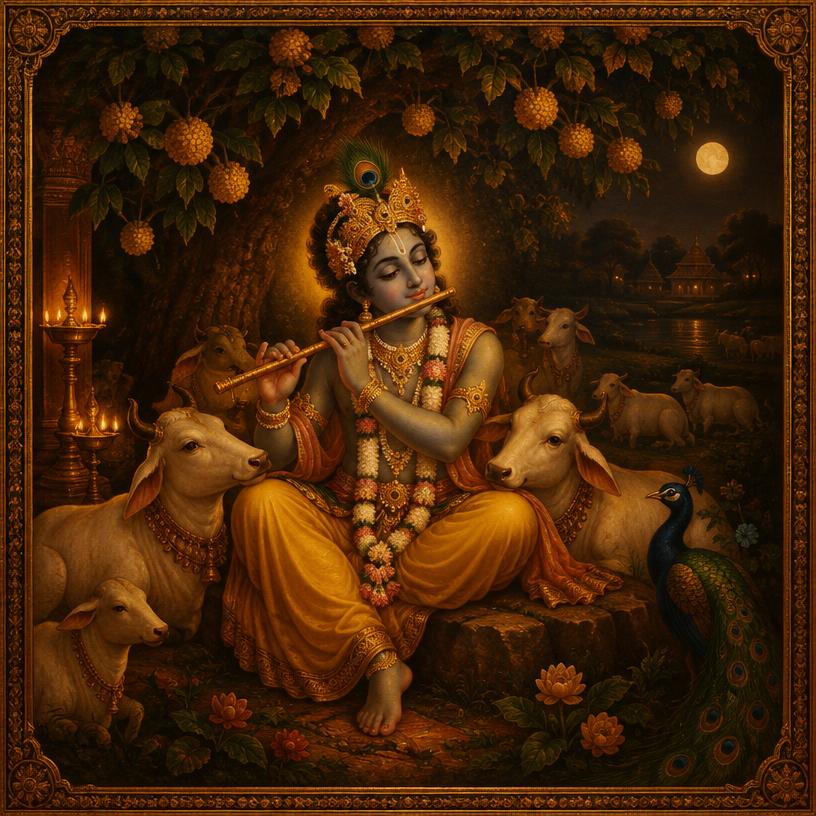
Sharad Purnima & Kojagari devotional artwork

शरद पूर्णिमा और कोजागरी

Sharad Purnima & Kojagari

The clear autumn full moon, observed with night vigil, moonlit kheer and traditions of Lakshmi or Krishna.

Date (2026)

25 October 2026

Tithi

Ashwin Shukla Purnima

Month

Ashwin

Deity

Lakshmi and Krishna

Katha — the story behind it

01

The sacred story

On Sharad Purnima, the bright autumn moon becomes the setting for different, sometimes overlapping devotional stories. In Vaishnava tradition, Krishna plays his flute in Vrindavan, and the gopis leave their ordinary concerns to join him. In the rasa lila, his presence answers each devotee’s longing, turning the moonlit night into an image of love centered on the divine rather than personal possession. Many devotees remember this through singing, worship, and keeping a devotional vigil. In Kojagari traditions, Lakshmi travels through the night asking who is awake. Households welcome her with lamps, पूजा, and wakefulness, hoping for prosperity and well-being. The emphasis is not simply on staying out of bed, but on receiving blessings with attention, cleanliness, and gratitude. In many families, milk or rice kheer is placed in the moonlight and later shared as प्रसाद. This expresses a traditional belief in the night’s nourishing qualities, not a medically established effect. Customs differ across regions: some emphasize Krishna, others Lakshmi, and others the moon and seasonal abundance. Together, these accounts encourage loving awareness, generosity, and the sharing of blessings rather than treating any single observance as compulsory for everyone.

02

Meaning within the story

The clear autumn full moon, observed with night vigil, moonlit kheer and traditions of Lakshmi or Krishna. The observance joins season and attention: after humid monsoon nights, the clear moon becomes an image of an unobscured mind.

03

How the story becomes worship

Evening worship: The bright full moon is met with white offerings and an alert mind rather than sleep. Keep the vigil: The traditional question 'who is awake?' concerns awareness as much as remaining physically awake. Share moonlit kheer: Cooling milk and the clear autumn moon mark the seasonal shift after the rains; covering the food keeps symbolism safe.

Where it comes from

Bhagavata Purana, Rasa PanchadhyayiRegional Kojagari traditions

Puja samagri — what to gather

  • ·Milk, rice, sugar and cardamom for kheer
  • ·A clean covered vessel for moonlight
  • ·White flowers and a ghee lamp
  • ·Krishna or Lakshmi image according to tradition

Vrat — the fast

Some fast until moonrise; others eat only after the evening offering. No single rule applies across regions.

Aarti & shloka — read, understand, listen

Aarti · common version

Aarti Kunj Bihari Ki

आरती कुंजबिहारी की, श्री गिरिधर कृष्ण मुरारी की॥ गले में बैजन्ती माला, बजावै मुरली मधुर बाला। श्रवण में कुण्डल झलकाला, नन्द के आनन्द नन्दलाला॥ गगन सम अंग कान्ति काली, राधिका चमक रही आली। लतन में ठाढ़े बनमाली, भ्रमर सी अलक कस्तूरी तिलक॥ आरती कुंजबिहारी की॥

Roman transliteration

Aarti Kunj Bihari ki, Shri Giridhara Krishna Murari ki. Gale mein Vaijayanti mala, bajavai murali madhura bala.

Complete aarti meaning

This is the aarti of Krishna, the grove-dwelling lifter of Govardhana and vanquisher of Mura. Wearing the Vaijayanti garland, he plays the sweet flute; earrings shine at his ears and he is Nanda's delight. Dark as a rain cloud, crowned with forest flowers and a musk tilak, he stands radiant beside Radha.

Sung with temple-style devotional accompaniment

Shloka · with meaning

Krishna pranam

वसुदेवसुतं देवं कंसचाणूरमर्दनम्। देवकीपरमानन्दं कृष्णं वन्दे जगद्गुरुम्॥

Vasudeva-sutaṁ devaṁ, Kaṁsa-Cāṇūra-mardanam; Devakī-paramānandaṁ, Kṛṣṇaṁ vande Jagadgurum.

Meaning

I bow to Krishna, son of Vasudeva, joy of Devaki, vanquisher of tyranny, and teacher of the world.

A Braj aarti widely sung for Krishna; temple verses and pronunciation vary by region.

Next in the year

Karwa Chauth

29 October 2026

Continue

From the day to the doing

Want to perform this puja properly, at home or at a temple?

Puja mode walks the full sequence — simple or detailed — with the meaning of every act.

Open puja mode