DharmaPath
Festival calendar
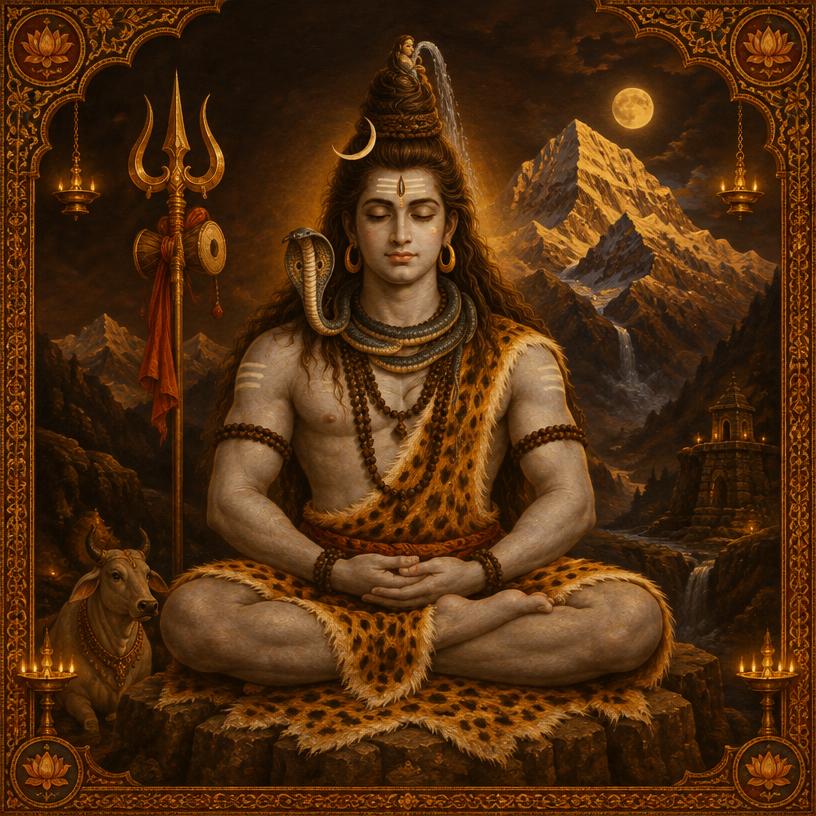
Maha Shivaratri devotional artwork

महाशिवरात्रि

Maha Shivaratri

The great night of Shiva — kept awake rather than celebrated, with abhisheka through four watches of the night.

Date (2026)

15 February 2026

Tithi

Krishna Chaturdashi

Month

Phalguna (Magha in some reckonings)

Deity

Shiva

Katha — the story behind it

01

The sacred story

A widely told Shivaratri story follows a hunter who spends a fearful night in a bilva tree, unaware that a Shiva lingam stands below. Having found no food, he remains hungry and awake. As he moves, bilva leaves fall onto the lingam. In some versions, tears shed for his hungry family also fall below; other tellings describe water dripping from his vessel. Without planning it, he performs acts resembling a night's worship: fasting, keeping vigil, and offering leaves and water. Shiva's grace reveals the possibility of change even in someone who has not approached him through formal ritual. Details of the hunter's encounters and transformation vary among versions. Another associated story comes from Samudra Manthana. When the deadly halahala poison emerges, Shiva takes it into his throat to protect the world, becoming known as Neelkanth. Some devotional retellings connect the night's vigil with the gods watching over him. Other traditions celebrate Shiva and Parvati's marriage. Devotees observe व्रत, offer water and bilva leaves, and keep prayerful vigil. These stories encourage compassion, self-restraint, and an awakened heart; the hunter's accidental offerings are not a promise that empty ritual automatically removes wrongdoing.

02

Meaning within the story

The great night of Shiva — kept awake rather than celebrated, with abhisheka through four watches of the night. Shivaratri sits on the darkest night before the new moon at winter's end — the low point of the year's light. Sitting up through it, awake and fasting, is a rehearsal of endurance rather than a celebration, which is why this festival has no feast and almost no colour.

03

How the story becomes worship

Sankalpa: An unstated intention drifts. Speaking it fixes the night's shape before fatigue sets in. Abhisheka: Shiva is the one who held the poison. The unbroken cool stream is read as continuing to cool that heat — care given rather than a favour asked. Bilva patra: The cheapest leaf in the forest, offered as the highest. The three lobes are read variously as the three eyes, three gunas, or three worlds. The four prahars: The vigil is the practice. Holding attention through the hours when the body wants sleep is the whole point of the night. Paran: The fast is closed deliberately, not abandoned when hunger wins.

Where it comes from

Shiva Purana, Vidyeshvara SamhitaLinga PuranaSkanda PuranaGaruda Purana

Puja samagri — what to gather

  • ·Bilva (bel) leaves, in threes, unbroken
  • ·Milk, curd, ghee, honey, sugar for panchamrita
  • ·Gangajal or clean water in a lota
  • ·Bhasma (ash), chandan, dhatura and aak flowers
  • ·A ghee lamp and cotton wicks to last the night
  • ·Fruits and milk for breaking the fast

Vrat — the fast

Nirjala (waterless) for the strict; most keep phalahar — fruit, milk, water, no grain or salt — from sunrise to the next morning.

Aarti & shloka — read, understand, listen

Aarti · common version

Om Jai Shiv Omkara

ॐ जय शिव ओंकारा, स्वामी जय शिव ओंकारा। ब्रह्मा विष्णु सदाशिव, अर्द्धांगी धारा॥ एकानन चतुरानन पंचानन राजे। हंसासन गरुड़ासन वृषवाहन साजे॥ दो भुज चार चतुर्भुज दस भुज अति सोहे। तीनों रूप निरखता त्रिभुवन जन मोहे॥ अक्षमाला वनमाला मुण्डमाला धारी। चंदन मृगमद सोहै भाले शशिधारी॥ श्वेताम्बर पीताम्बर बाघम्बर अंगे। सनकादिक गरुणादिक भूतादिक संगे॥ ॐ जय शिव ओंकारा॥

Roman transliteration

Om jai Shiva Omkara, swami jai Shiva Omkara. Brahma Vishnu Sadashiva, ardhangi dhara.

Complete aarti meaning

Glory to Shiva, the sacred Om. Brahma, Vishnu and Sadashiva are understood here as one divine reality. The hymn beholds the one, four and five-faced forms, their different vehicles and emblems, and praises Shiva as the moon-crested Lord accompanied by sages and attendant beings.

Sung with temple-style devotional accompaniment

Shloka · with meaning

Panchakshara mantra

ॐ नमः शिवाय

Om Namaḥ Śivāya.

Meaning

I bow to Shiva — the auspicious consciousness within and beyond all forms.

A widely sung Hindi aarti. Line order and additional verses differ among temples and household prayer books.

Next in the year

Holi & Holika Dahan

3–4 March 2026

Continue

From the day to the doing

Want to perform this puja properly, at home or at a temple?

Puja mode walks the full sequence — simple or detailed — with the meaning of every act.

Open puja mode