DharmaPath
Festival calendar
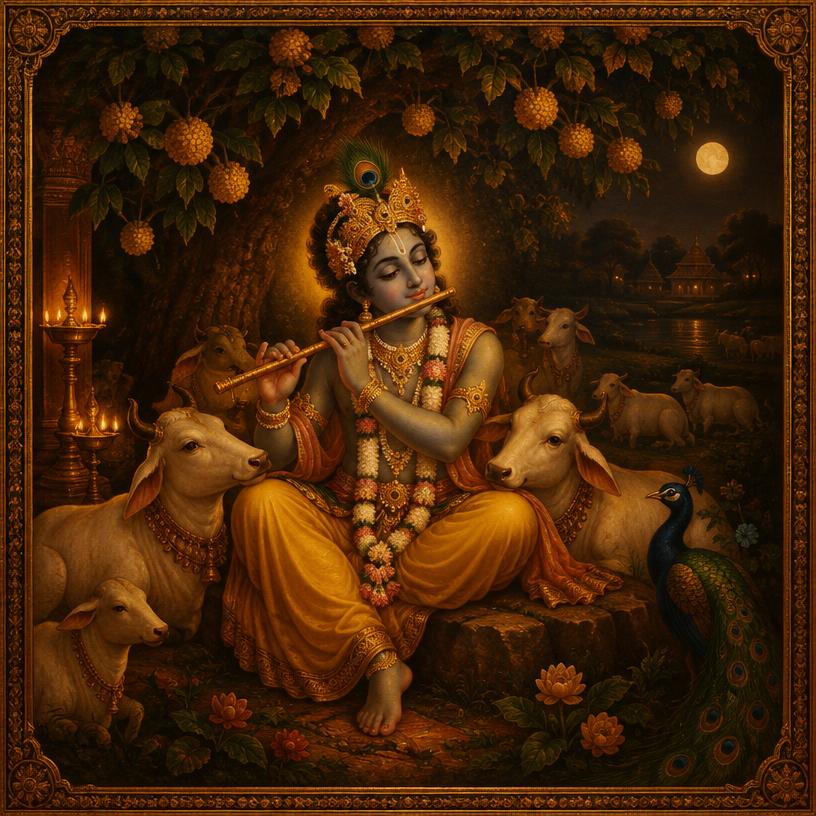
Holi & Holika Dahan devotional artwork

होली

Holi & Holika Dahan

A bonfire on the full-moon night, colour on the day after — the year's one licensed suspension of rank and distance.

Date (2026)

3–4 March 2026

Tithi

Purnima, then Pratipada

Month

Phalguna

Deity

Vishnu (Narasimha), Krishna

Katha — the story behind it

01

The sacred story

Holi brings together several sacred stories rather than a single account followed everywhere. In the Prahlada story, King Hiranyakashipu demanded that his subjects worship him, but his son remained devoted to Vishnu. Angered by this refusal, the king tried repeatedly to destroy the boy. Prahlada survived through divine protection. Finally, his aunt Holika sat with him in a blazing fire, trusting a boon that supposedly protected her from burning. She perished, while Prahlada emerged unharmed. Retellings explain her failed protection differently: some describe limits on the boon, while others emphasize that a sacred gift cannot justify wrongdoing. Holika Dahan, the evening bonfire, recalls this victory of devotion over arrogance and cruelty. Families gather for पूजा and, according to local custom, offer grain or other seasonal offerings. The colour-play is also associated with Krishna and Radha in Braj. A popular account says Krishna worried about his dark complexion beside Radha’s fair skin; Yashoda playfully suggested colouring her face. Braj traditions celebrate their loving play through songs and colours. Together, these stories encourage steadfast faith, humility, affection, and celebration without humiliating or harming others.

02

Meaning within the story

A bonfire on the full-moon night, colour on the day after — the year's one licensed suspension of rank and distance. Holi lands at the wheat harvest and the end of winter, when the community has both surplus and accumulated friction. The bonfire disposes of the old, the colour dissolves rank for a day, and the calendar returns everything to normal by evening — a pressure valve with a fixed closing time.

03

How the story becomes worship

Building the pyre: Collecting from the whole street makes the fire belong to no one house — the festival is built as a public thing before it is lit. Parikrama and thread: The circuit encloses what is to be burnt: the year's grudge, the past season, the standing crop's chaff. Holika Dahan: Roasting the first grain in a communal fire is a harvest rite older than the story attached to it — the field's produce tested by fire before it is eaten. Rangwali Holi: Covered in gulal, people become unreadable. The suspension is bounded to one morning, which is what makes it survivable.

Where it comes from

Bhagavata Purana, Canto 7Narada PuranaVishnu PuranaGarga Samhita

Puja samagri — what to gather

  • ·Wood, dried cowdung cakes and dry leaves for the pyre
  • ·Raw chickpeas, wheat stalks and new grain to roast in it
  • ·Roli, akshata, water and a thread for the parikrama
  • ·Gulal and natural colours — tesu flower, turmeric, beetroot
  • ·Gujiya, thandai and sweets for the day after

Vrat — the fast

No fast. Some keep a light diet before the dahan; the day after is deliberately indulgent.

Aarti & shloka — read, understand, listen

Aarti · common version

Om Jai Jagdish Hare

ॐ जय जगदीश हरे, स्वामी जय जगदीश हरे। भक्त जनों के संकट, क्षण में दूर करे॥ जो ध्यावे फल पावे, दुःख बिनसे मन का। सुख सम्पत्ति घर आवे, कष्ट मिटे तन का॥ मात पिता तुम मेरे, शरण गहूँ मैं किसकी। तुम बिन और न दूजा, आस करूँ मैं जिसकी॥ तुम पूरण परमात्मा, तुम अन्तर्यामी। पारब्रह्म परमेश्वर, तुम सबके स्वामी॥

Roman transliteration

Om jai Jagadish Hare, swami jai Jagadish Hare. Bhakta janon ke sankata, kshana mein dura kare.

Complete aarti meaning

Glory to the Lord of the universe, who removes devotees' distress. Those who meditate upon you receive the fruit of devotion and find sorrow eased. You are mother and father, the refuge beyond every other support, the complete indwelling Self and sovereign of all.

Sung with temple-style devotional accompaniment

Shloka · with meaning

Vishnu mantra

ॐ नमो भगवते वासुदेवाय

Om Namo Bhagavate Vāsudevāya.

Meaning

Salutations to Bhagavan Vasudeva, the indwelling divine present in all beings.

Om Jai Jagdish Hare is used widely across Vaishnava and general household worship; Holi traditions may instead sing Krishna-specific aarti and phag.

Next in the year

Ugadi & Gudi Padwa

19 March 2026

Continue

From the day to the doing

Want to perform this puja properly, at home or at a temple?

Puja mode walks the full sequence — simple or detailed — with the meaning of every act.

Open puja mode