DharmaPath
Festival calendar
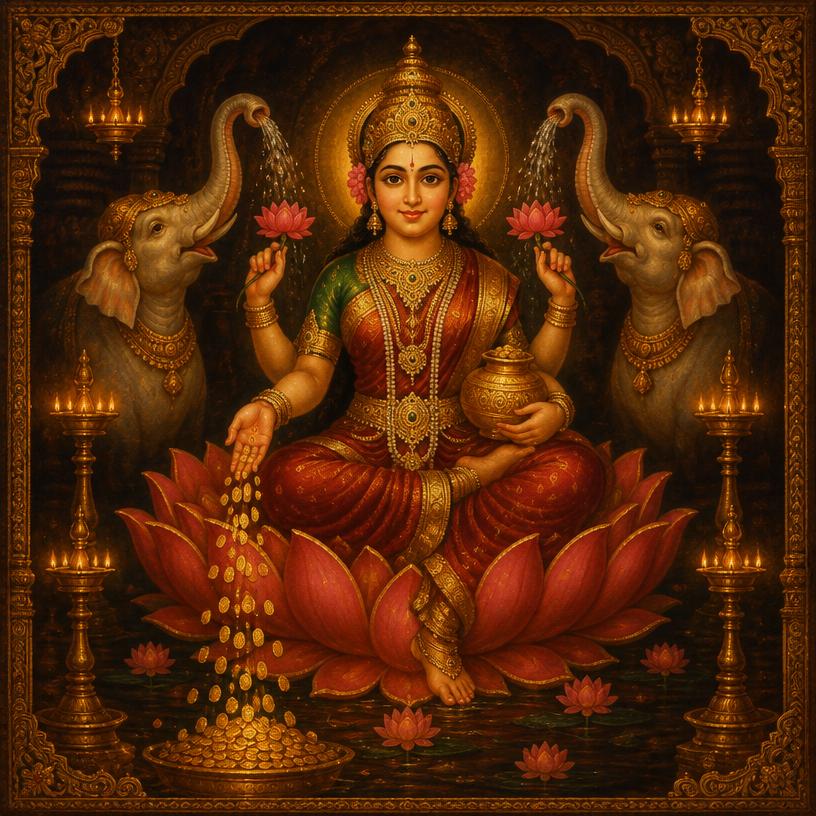
Diwali — five days devotional artwork

दीपावली

Diwali — five days

Not one festival but five consecutive ones — wealth, light, homecoming, mountain, and siblings — kept across the darkest new moon.

Date (2026)

6–10 November 2026

Tithi

Trayodashi to Dwitiya

Month

Kartika

Deity

Lakshmi, Ganesha, Rama, Yama

Katha — the story behind it

01

The sacred story

Diwali is a festival season with several connected stories rather than one universally shared origin. In a widespread northern account, Rama returns to Ayodhya with Sita and Lakshmana after fourteen years of exile and victory over Ravana. The people welcome them with lamps, turning homecoming into a celebration of hope and rightful rule. In many southern and some western traditions, Naraka Chaturdashi recalls Krishna’s defeat of Narakasura and the freeing of those he held captive; some accounts give Satyabhama a decisive role. Early bathing and festive preparations accompany this remembrance in many homes. Lakshmi पूजा centres on welcoming prosperity with care and gratitude. Her emergence from the churning of the ocean is also associated with Diwali in some traditions, though accounts of its timing vary. The following observances carry further stories: Govardhan पूजा remembers Krishna sheltering villagers and cattle beneath the lifted hill when Indra sends devastating rain. Bhai Dooj recalls Yamuna welcoming her brother Yama, linking hospitality with prayers for a sibling’s wellbeing. Lamps, पूजा, food offerings, and family visits give these narratives everyday expression. Across regional differences, the season encourages generosity, protection of the vulnerable, gratitude for sustenance, and the patient renewal of family and community bonds.

02

Meaning within the story

Not one festival but five consecutive ones — wealth, light, homecoming, mountain, and siblings — kept across the darkest new moon. Kartika amavasya is the darkest night of the clearest season, immediately after the harvest and at the start of the trading year. Lamps, accounts, cleaning, gifts, and family visits are all placed here because this is the moment the year's material position is actually settled.

03

How the story becomes worship

Dhanteras: The lamp for Yama at the threshold is the older layer — the festival opens by acknowledging death before celebrating abundance. Naraka Chaturdashi: Setting a pre-dawn ritual bath before the main night is a practical reset after the cleaning and before the feasting. Lakshmi Puja: Ganesha is seated with her because wealth without discernment is held to be unstable. The open doors and lit corners are an argument about what attracts prosperity — order and welcome. Govardhan Puja / Annakut: The story is Krishna turning worship away from the distant rain-god toward the hill and herd that actually sustained the village — a re-direction toward what is near and real. Bhai Dooj: The festival closes on the obligation to visit. Prosperity kept at home, without relations maintained, is treated as incomplete.

Where it comes from

Padma PuranaSkanda PuranaBhagavata Purana, Canto 10Ramcharitmanas

Puja samagri — what to gather

  • ·Clay diyas, wicks, mustard or til oil
  • ·Lakshmi and Ganesha images, seated together
  • ·Kamal (lotus), marigold, kheel-batasha, coins
  • ·Account books or ledgers, a new broom
  • ·Rangoli colours, mango leaf toran

Vrat — the fast

A fast until the evening Lakshmi Puja is common on amavasya; Dhanteras is kept by some for Dhanvantari.

Aarti & shloka — read, understand, listen

Aarti · common version

Om Jai Lakshmi Mata

ॐ जय लक्ष्मी माता, मैया जय लक्ष्मी माता। तुमको निशिदिन सेवत, हर विष्णु विधाता॥ उमा रमा ब्रह्माणी, तुम ही जग माता। सूर्य चन्द्रमा ध्यावत, नारद ऋषि गाता॥ दुर्गा रूप निरंजनि, सुख सम्पत्ति दाता। जो कोई तुमको ध्यावत, ऋद्धि सिद्धि धन पाता॥ तुम पाताल निवासिनि, तुम ही शुभदाता। कर्म प्रभाव प्रकाशिनि, भवनिधि की त्राता॥ ॐ जय लक्ष्मी माता॥

Roman transliteration

Om jai Lakshmi Mata, maiya jai Lakshmi Mata. Tumako nishidina sevata, Hari Vishnu Vidhata.

Complete aarti meaning

Glory to Mother Lakshmi, served continually by Vishnu and the Creator. As Uma, Rama and Brahmani, you are mother of the world; sun, moon and sages contemplate you. You grant wellbeing and abundance, illuminate the consequences of action, and carry beings across the ocean of existence.

Sung with temple-style devotional accompaniment

Shloka · with meaning

Mahalakshmi mantra

ॐ श्रीं महालक्ष्म्यै नमः

Om Śrīṁ Mahālakṣmyai Namaḥ.

Meaning

Salutations to Mahalakshmi, the principle of abundance, beauty and auspicious wellbeing.

A common Hindi Lakshmi aarti; Diwali worship also includes Ganesha and may include Kali, Rama or family deities by region.

Next in the year

Chhath Puja

13–16 November 2026

Continue

From the day to the doing

Want to perform this puja properly, at home or at a temple?

Puja mode walks the full sequence — simple or detailed — with the meaning of every act.

Open puja mode