DharmaPath
Festival calendar
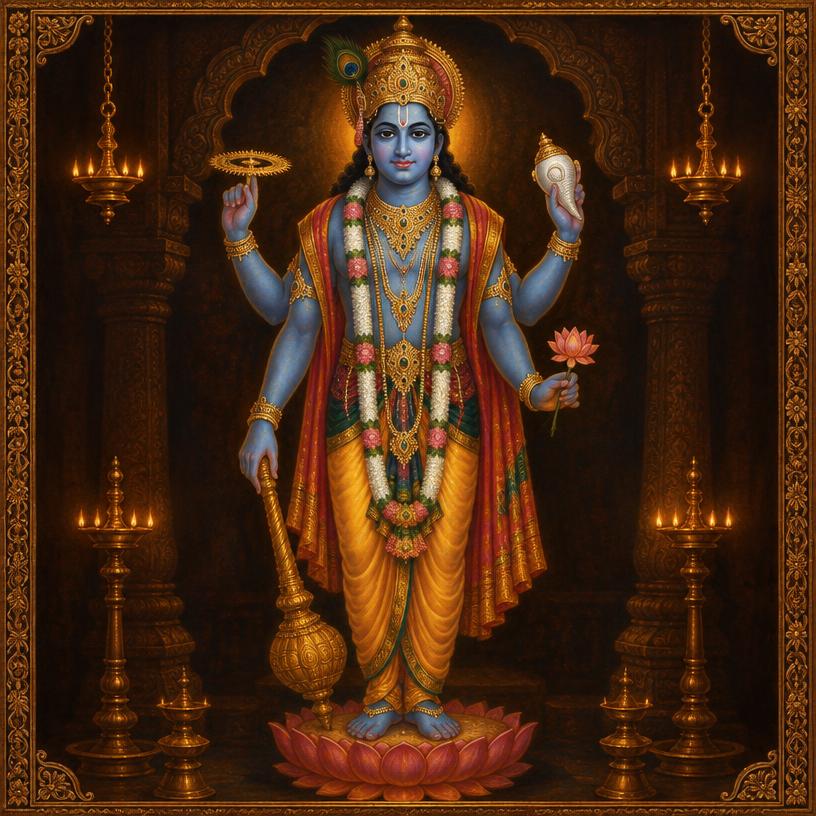
Anant Chaturdashi & Ganesh Visarjan devotional artwork

अनन्त चतुर्दशी और गणेश विसर्जन

Anant Chaturdashi & Ganesh Visarjan

A Vishnu vrat centred on a fourteen-knotted thread, sharing the day with the farewell immersion of Ganesha.

Date (2026)

25 September 2026

Tithi

Bhadrapada Shukla Chaturdashi

Month

Bhadrapada

Deity

Vishnu as Ananta; Ganesha

Katha — the story behind it

01

The sacred story

In a widely told Anant Chaturdashi katha, Krishna advises Yudhishthira during hardship to observe the vow of Ananta, the endless form of Vishnu. He recounts the story of Sushila and her husband, Kaundinya. While travelling, Sushila encountered women performing Ananta पूजा. She learned the observance, worshipped with them, and tied the sacred thread with fourteen knots. In time, the couple’s household prospered. Kaundinya, however, dismissed the thread and credited their success to his own efforts. He removed and cast it into the fire. Their good fortune then collapsed. Troubled by what followed, Kaundinya set out to seek Ananta. His long search humbled him, and, through divine guidance, he came to understand his arrogance. He returned to the vow with sincerity. The story connects the fourteen-knotted thread with faithful remembrance, gratitude, and a commitment renewed over time; some traditions prescribe observing the व्रत for fourteen years. Details of the journey and household rituals vary by region and retelling. In many places, the day also marks a major Ganesh immersion, a distinct devotional connection. The katha’s lesson is not to blame hardship on a missing thread, but to temper pride and honour one’s संकल्प with steady devotion.

02

Meaning within the story

A Vishnu vrat centred on a fourteen-knotted thread, sharing the day with the farewell immersion of Ganesha. Two movements meet on this day: Vishnu's endless continuity and Ganesha's deliberate release. Together they teach commitment without possession.

03

How the story becomes worship

Prepare the Ananta sutra: The knots recall the fourteen lokas held within boundless reality; the thread makes a cosmological idea wearable. Worship Ananta Vishnu: Ananta means endless. Worship directs attention beyond a temporary crisis while still asking for steadiness within it. Tie the thread: A vow is tied to the body so it remains a daily reminder rather than a one-day wish. Bid farewell to Ganesha: Visarjan teaches that a sacred form may be loved fully and then released; presence is not limited to the material image.

Where it comes from

Mahabharata, Anushasana Parva traditionBhavishya PuranaRegional Ananta Vrata Katha

Puja samagri — what to gather

  • ·Image of Vishnu reclining on Ananta Shesha
  • ·Ananta sutra with fourteen knots
  • ·Kalash, flowers, tulsi, lamp and incense
  • ·Fourteen fruits or simple offerings according to capacity
  • ·Eco-friendly Ganesha murti and immersion vessel where applicable

Vrat — the fast

A day-long vrat is common, with fruit or water according to capacity, broken after puja. Health needs take priority.

Aarti & shloka — read, understand, listen

Aarti · common version

Om Jai Jagdish Hare

ॐ जय जगदीश हरे, स्वामी जय जगदीश हरे। भक्त जनों के संकट, क्षण में दूर करे॥ जो ध्यावे फल पावे, दुःख बिनसे मन का। सुख सम्पत्ति घर आवे, कष्ट मिटे तन का॥ मात पिता तुम मेरे, शरण गहूँ मैं किसकी। तुम बिन और न दूजा, आस करूँ मैं जिसकी॥ तुम पूरण परमात्मा, तुम अन्तर्यामी। पारब्रह्म परमेश्वर, तुम सबके स्वामी॥

Roman transliteration

Om jai Jagadish Hare, swami jai Jagadish Hare. Bhakta janon ke sankata, kshana mein dura kare.

Complete aarti meaning

Glory to the Lord of the universe, who removes devotees' distress. Those who meditate upon you receive the fruit of devotion and find sorrow eased. You are mother and father, the refuge beyond every other support, the complete indwelling Self and sovereign of all.

Sung with temple-style devotional accompaniment

Shloka · with meaning

Vishnu mantra

ॐ नमो भगवते वासुदेवाय

Om Namo Bhagavate Vāsudevāya.

Meaning

Salutations to Bhagavan Vasudeva, the indwelling divine present in all beings.

Om Jai Jagdish Hare is used widely across Vaishnava and general household worship; Holi traditions may instead sing Krishna-specific aarti and phag.

Next in the year

Pitru Paksha (Shraddha Paksha)

26 September – 10 October 2026

Continue

From the day to the doing

Want to perform this puja properly, at home or at a temple?

Puja mode walks the full sequence — simple or detailed — with the meaning of every act.

Open puja mode