DharmaPath
Festival calendar
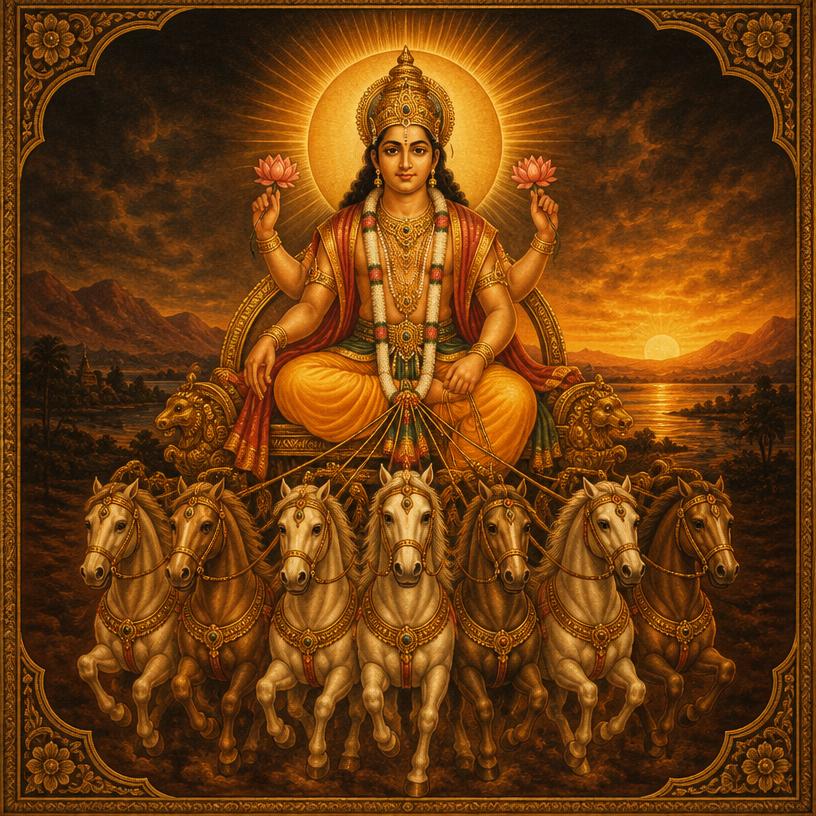
Makar Sankranti devotional artwork

मकर संक्रान्ति

Makar Sankranti

The one major festival fixed to the solar calendar rather than the moon — the sun turns north and the cold half of the year begins to loosen.

Date (2026)

14 January 2026

Tithi

Sun's entry into Makara (Capricorn)

Month

Pausha–Magha

Deity

Surya

Katha — the story behind it

01

The sacred story

A familiar tradition gives Makar Sankranti a story of family reconciliation. Surya, the Sun god, visits his son Shani, who rules Makara, the zodiac sign Capricorn. Although their relationship is often described as strained, the father's visit becomes a reminder that affection can bridge distance and disagreement. Devotees connect this meeting with Surya's entry into Makara, which the festival marks. The festival also recalls Bhishma in the Mahabharata. Wounded in battle and resting on a bed of arrows, he could choose the time of his death. He waited for Uttarayana, the Sun's northward course, traditionally regarded as an auspicious time, before leaving his body. This is a separate narrative associated with the season, not another episode in Surya and Shani's meeting. Bathing, offering water to Surya, giving charity, and sharing sesame-and-jaggery sweets express gratitude, generosity, and renewed goodwill. Customs and foods differ widely across regions, and related harvest celebrations carry their own stories. Together, these traditions invite families to soften old resentments, share what they have, and meet a new season with patience and hope.

02

Meaning within the story

The one major festival fixed to the solar calendar rather than the moon — the sun turns north and the cold half of the year begins to loosen. Because it tracks the sun, the date barely moves — this is the agricultural hinge of the year, the first harvest counted and the light lengthening. Sesame and jaggery are dense, warming foods for the coldest weeks; the ritual attaches them to the day rather than leaving it to chance.

03

How the story becomes worship

Bathe before sunrise: The day is treated as a threshold. Bathing first marks the crossing rather than washing away anything in particular. Arghya to Surya: Water poured in sunlight scatters the beam — the offering is made visible to the one receiving it. Sesame is the seed of the winter harvest being returned first. Til-gur and the greeting: A worked-out social repair: the calendar sets one day on which old quarrels are addressed with food rather than argument. Daan: The harvest has just come in and winter is not over. The festival places giving at the point of surplus.

Where it comes from

Mahabharata, Anushasana ParvaSurya SiddhantaBhavishya Purana

Puja samagri — what to gather

  • ·Til (sesame) and gur (jaggery), whole and as laddoo
  • ·New rice and freshly harvested grain
  • ·Water in a copper vessel for arghya to the sun
  • ·Red flowers, roli, akshata
  • ·Clothes or grain kept aside for daan (giving)

Vrat — the fast

No fast is prescribed. Many eat khichdi, and some take only til-gur foods until the sun offering is done.

Aarti & shloka — read, understand, listen

Aarti · common version

Om Jai Surya Bhagwan

ॐ जय सूर्य भगवान, जय हो दिनकर भगवान। जगत के नेत्र स्वरूपा, तुम हो त्रिगुण स्वरूपा। धरत सब ही तव ध्यान, ॐ जय सूर्य भगवान॥ सारथी अरुण हैं प्रभु तुम, श्वेत कमलधारी। तुम चार भुजाधारी, अश्व हैं सात तुम्हारे। कोटि किरण पसारे, ॐ जय सूर्य भगवान॥

Roman transliteration

Om jai Surya Bhagavan, jai ho Dinakar Bhagavan. Jagat ke netra svarupa, tum ho triguna svarupa. Dharata sab hi tava dhyana.

Complete aarti meaning

Glory to Lord Surya, maker of the day. You are the eyes of the universe and embody nature's three qualities; all beings meditate upon you. Aruna is your charioteer, you hold the white lotus, and your seven horses carry your countless rays across creation.

Sung with temple-style devotional accompaniment

Shloka · with meaning

Surya pranam

जपाकुसुमसंकाशं काश्यपेयं महद्युतिम्। तमोऽरिं सर्वपापघ्नं प्रणतोऽस्मि दिवाकरम्॥

Japākusuma-saṅkāśaṁ Kāśyapeyaṁ mahādyutim, tamo'riṁ sarva-pāpa-ghnaṁ praṇato'smi Divākaram.

Meaning

I bow to the sun, radiant like the hibiscus, descendant of Kashyapa, destroyer of darkness and wrongdoing.

A common North Indian Surya aarti and the traditional Surya pranam verse; wording can differ by prayer book.

Next in the year

Vasant Panchami

23 January 2026

Continue

From the day to the doing

Want to perform this puja properly, at home or at a temple?

Puja mode walks the full sequence — simple or detailed — with the meaning of every act.

Open puja mode