DharmaPath
Festival calendar
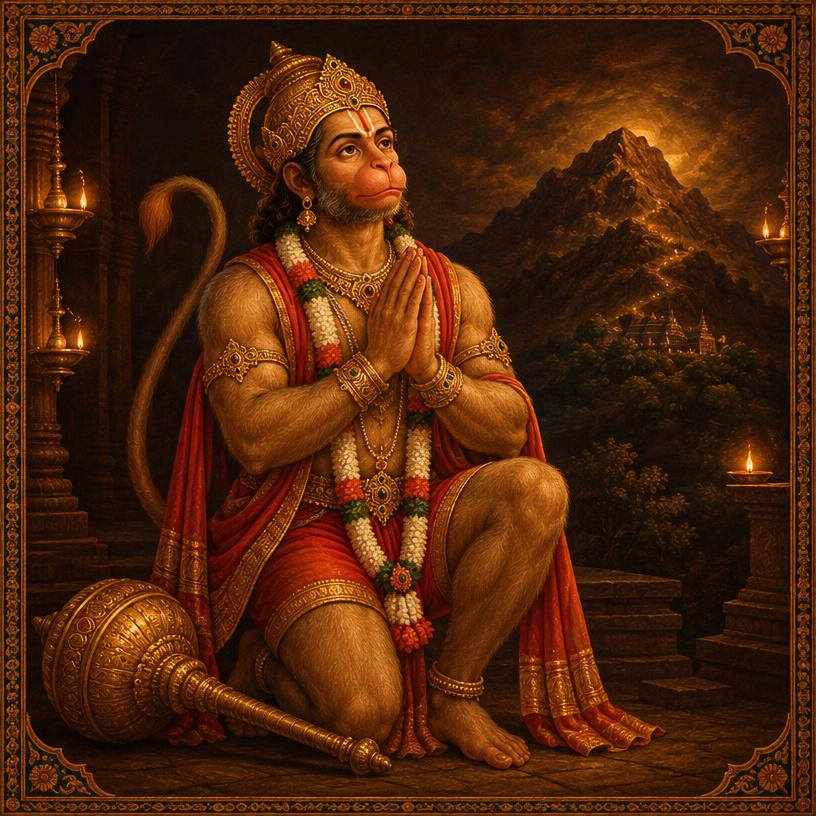
Hanuman Jayanti devotional artwork

हनुमान जयन्ती

Hanuman Jayanti

The appearance of Hanuman — kept at sunrise, with the Chalisa and Sundarakanda, and offerings of sindoor and oil.

Date (2026)

1 April 2026

Tithi

Purnima

Month

Chaitra

Deity

Hanuman

Katha — the story behind it

01

The sacred story

Hanuman Jayanti celebrates the birth of Hanuman, whose strength is inseparable from devotion and service. In many traditions, his mother Anjana was an apsara living on earth who undertook तपस्या for a child. One later account connects his birth with Dasharatha’s yajna: a kite carried away some sacred payasam, and Vayu brought it to Anjana. Other traditions explain Vayu’s role differently and honour Kesari as Hanuman’s father; the payasam episode is not shared by every telling. As a child, Hanuman saw the rising sun and leapt towards it, thinking it was a ripe fruit. In a familiar continuation, Indra struck him with his thunderbolt. Vayu, distressed, withdrew the air, until the gods restored peace and blessed the child with extraordinary gifts. His boundless energy would later become devoted service to Rama. Devotees observe the festival with पूजा, recitation, आरती, and offerings according to local custom. A popular devotional story explains sindoor: learning that Sita applied it for Rama’s long life, Hanuman covered himself with it out of wholehearted love. This is a later devotional tradition, not an episode found in every Ramayana. Regional observances vary, but the central lesson remains strength guided by humility, courage, and selfless service.

02

Meaning within the story

The appearance of Hanuman — kept at sunrise, with the Chalisa and Sundarakanda, and offerings of sindoor and oil. Hanuman is approached less for boons than for capacity — strength, memory, courage, steadiness under strain. That is why the observance is physical and early, and why the text read is the one about doing a difficult thing alone.

03

How the story becomes worship

Dawn observance: The birth is placed at sunrise, and the deity is associated with the sun he leapt toward as a child. Sindoor and oil: Traced to Hanuman's own reasoning — that if a little sindoor lengthens Rama's life, a whole body of it does more. The custom preserves a devotee's argument, not a rule. Sundarakanda path: It is the section where he acts alone, without Rama present. It is read when people need to act without their support nearby. Offering and distribution: The deity is one of service. Keeping the prasad would contradict the figure being honoured.

Where it comes from

Valmiki Ramayana, SundarakandaShiva PuranaSkanda PuranaHanuman Chalisa (Tulsidas)

Puja samagri — what to gather

  • ·Sindoor and chameli (jasmine) oil
  • ·A red cloth or flag
  • ·Boondi laddoo, banana, gur-chana
  • ·Betel leaf (paan), tulsi
  • ·Hanuman Chalisa; a copy of the Sundarakanda

Vrat — the fast

Many keep a fruit fast for the day; Tuesdays and Saturdays carry the same observance through the year.

Aarti & shloka — read, understand, listen

Aarti · common version

Aarti Kije Hanuman Lala Ki

आरती कीजै हनुमान लला की। दुष्ट दलन रघुनाथ कला की॥ जाके बल से गिरिवर काँपे। रोग दोष जाके निकट न झाँके॥ अंजनि पुत्र महा बलदाई। संतन के प्रभु सदा सहाई॥ दे बीरा रघुनाथ पठाए। लंका जारि सिया सुधि लाए॥ लंका सो कोट समुद्र सी खाई। जात पवनसुत बार न लाई॥ आरती कीजै हनुमान लला की॥

Roman transliteration

Aarti kijai Hanuman lala ki, dushta dalana Raghunatha kala ki. Jake bala se girivara kampe.

Complete aarti meaning

Perform the aarti of beloved Hanuman, the power of Rama who defeats cruelty. Mountains tremble before his strength and affliction does not approach where he is remembered. Son of Anjani and helper of saints, he crossed the ocean, burned Lanka and returned with news of Sita.

Sung with temple-style devotional accompaniment

Shloka · with meaning

Hanuman dhyana

मनोजवं मारुततुल्यवेगं जितेन्द्रियं बुद्धिमतां वरिष्ठम्। वातात्मजं वानरयूथमुख्यं श्रीरामदूतं शरणं प्रपद्ये॥

Manojavaṁ māruta-tulya-vegaṁ, jitendriyaṁ buddhimatāṁ variṣṭham; Vātātmajaṁ vānara-yūtha-mukhyaṁ, Śrī-Rāma-dūtaṁ śaraṇaṁ prapadye.

Meaning

I seek refuge in Rama's messenger, swift as the mind and wind, disciplined, wise, and foremost among the vanaras.

The aarti is attributed in tradition to Tulsidas; local melodies and some later verses vary.

Next in the year

Akshaya Tritiya

19 April 2026

Continue

From the day to the doing

Want to perform this puja properly, at home or at a temple?

Puja mode walks the full sequence — simple or detailed — with the meaning of every act.

Open puja mode