DharmaPath
Festival calendar
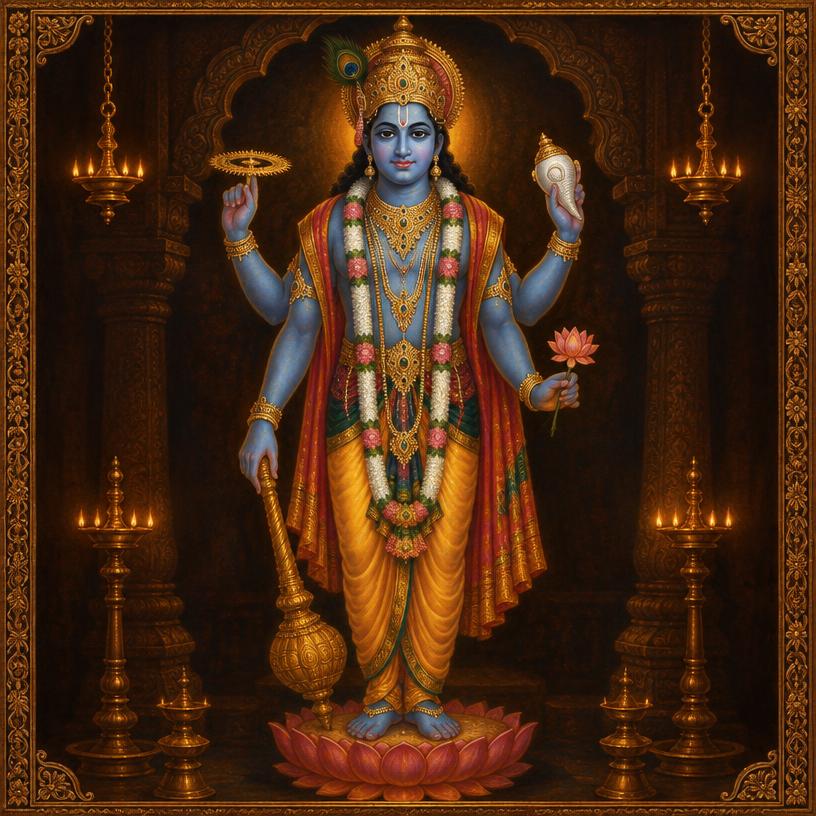
Guru Purnima devotional artwork

गुरु पूर्णिमा

Guru Purnima

The day the teacher is honoured — kept for Veda Vyasa, who arranged the Vedas, and for whoever taught you.

Date (2026)

29 July 2026

Tithi

Purnima

Month

Ashadha

Deity

Vyasa, and one's own teacher

Katha — the story behind it

01

The sacred story

Guru Purnima honours the teachers who help people move from confusion towards understanding. In Hindu tradition, the day is especially associated with Vyasa, the son of Satyavati and the sage Parashara. Seeing that people would struggle to preserve and learn the vast sacred teachings, Vyasa arranged the Veda into four collections. He entrusted these to disciples, traditionally named Paila, Vaishampayana, Jaimini, and Sumantu, so that each stream of learning could continue through careful teaching. Tradition also credits him with composing the Mahabharata, which brings difficult questions about duty, devotion, and human choices into a family’s story. Remembering this work, devotees honour Vyasa and their own teachers through पूजा, offerings, study, and service. Some renew a संकल्प to learn sincerely and live by what they have learned. The lesson is that gratitude to a guru should become patient practice, not merely ceremonial praise. Observances differ across communities. Some Hindu traditions emphasise their own lineages of teachers. Buddhists associate the Ashadha full moon with the Buddha’s first teaching at Sarnath; their observance has its own history and meaning. These traditions share respect for guidance without being identical accounts.

02

Meaning within the story

The day the teacher is honoured — kept for Veda Vyasa, who arranged the Vedas, and for whoever taught you. The full moon is taken as the image of the teacher — light received from elsewhere and passed on without being its source. The date also opens chaturmasa, the monsoon months when wandering ascetics stayed in one place and taught, so the festival sits at the start of the traditional study season.

03

How the story becomes worship

Padapuja: Knowledge came through a person. The gesture places the debt in a body and a name rather than an abstraction. Vyasa Puja: Teachers die; the chain does not. Honouring the seat rather than only the living teacher marks the transmission itself. Guru Dakshina: Teaching is not free of cost merely because knowledge is not diminished by sharing. The custom closes the exchange honestly. Resolution: The most accurate way to honour a teacher is to continue the work; the vow makes that measurable.

Where it comes from

Mahabharata, Adi ParvaVishnu PuranaSkanda PuranaGuru Gita (Skanda Purana)

Puja samagri — what to gather

  • ·Fresh flowers and fruit for the teacher's seat
  • ·A cloth, and something given by hand
  • ·A lamp, chandan, akshata
  • ·The text one is studying

Vrat — the fast

No fast. Many keep the day satvik and in silence for part of it.

Aarti & shloka — read, understand, listen

Aarti · common version

Guru Vandana

गुरु ब्रह्मा गुरुर्विष्णुः गुरुर्देवो महेश्वरः। गुरुः साक्षात् परब्रह्म तस्मै श्रीगुरवे नमः॥ अखण्डमण्डलाकारं व्याप्तं येन चराचरम्। तत्पदं दर्शितं येन तस्मै श्रीगुरवे नमः॥ अज्ञानतिमिरान्धस्य ज्ञानाञ्जनशलाकया। चक्षुरुन्मीलितं येन तस्मै श्रीगुरवे नमः॥

Roman transliteration

Guru Brahma, Gurur Vishnu, Gurur Devo Maheshvarah; Guruh sakshat Parabrahma, tasmai Shri Gurave namah.

Complete aarti meaning

The teacher is honoured as Brahma, Vishnu and Maheshvara, and as the direct presence of ultimate reality. I bow to the teacher who reveals the ground pervading all creation and opens eyes darkened by ignorance with the collyrium of knowledge.

Sung with temple-style devotional accompaniment

Shloka · with meaning

Salutation to the teacher

ध्यानमूलं गुरोर्मूर्तिः पूजामूलं गुरोः पदम्। मन्त्रमूलं गुरोर्वाक्यं मोक्षमूलं गुरोः कृपा॥

Dhyāna-mūlaṁ guroḥ mūrtiḥ, pūjā-mūlaṁ guroḥ padam; mantra-mūlaṁ guroḥ vākyaṁ, mokṣa-mūlaṁ guroḥ kṛpā.

Meaning

The teacher's form grounds meditation, the teacher's feet ground worship, the teaching grounds mantra, and grace grounds liberation.

Guru Purnima practice centres on one's own living or lineage teacher; no single aarti is universal.

Next in the year

Nag Panchami

17 August 2026

Continue

From the day to the doing

Want to perform this puja properly, at home or at a temple?

Puja mode walks the full sequence — simple or detailed — with the meaning of every act.

Open puja mode